Space is one of the most valuable resources on any construction site. You need room for materials, machinery, deliveries, vehicles, storage and, most importantly, people to work safely and efficiently.
Yet on many sites, a surprising amount of that valuable space is gradually taken over by waste.
Piles of rubble appear beside access routes. Excavated soil occupies an area needed for the next stage of groundworks. Skips fill faster than expected. Packaging and offcuts accumulate around working areas. Before long, waste is no longer simply something waiting to be removed. It is actively interfering with the project.
Good construction waste management is therefore about much more than disposal. It is about protecting usable site space, improving workflow and making sure waste leaves the site at the right time.
If waste is starting to compete with your project for space, here is what you can do about it.
Why Site Space Matters More Than You Think
Every square metre of a busy construction site has a purpose.
Space may be needed for:
- Material deliveries
- Plant and machinery
- Temporary storage
- Vehicle movements
- Loading and unloading
- Welfare facilities
- Waste containers
- Safe pedestrian routes
- Future phases of construction
When waste begins occupying areas intended for these activities, site efficiency suffers.
The problem is particularly noticeable on smaller developments, urban projects and sites with restricted access, where there may already be limited room to manoeuvre.
Even on larger developments, unmanaged waste can spread surprisingly quickly.
The solution is not simply finding another corner to store it. Waste needs to be incorporated into the site’s operational planning.
The Hidden Cost of Keeping Waste on Site
Waste occupying valuable space has a financial impact that is easy to underestimate.
Imagine an area that should be used for storing materials becoming filled with demolition rubble. The next delivery arrives, but there is nowhere suitable to unload it.
Materials may need to be stored somewhere less convenient, moved multiple times or delivered later.
Suddenly, waste has created additional handling, labour and scheduling problems.
Poor waste management can contribute to:
- Reduced productivity
- Additional material handling
- Delayed deliveries
- Restricted vehicle movements
- Increased labour requirements
- Health and safety concerns
- Project delays
The longer waste remains where it should not be, the greater the potential disruption.
Stop Treating Waste Removal as an Afterthought
One of the simplest improvements a construction project can make is planning waste removal before the waste actually appears.
Waste generation can often be predicted from the project programme.
Demolition will generate one type and volume of waste. Excavation and groundworks will generate another. Fit-out and finishing stages will create different materials again.
Before each stage begins, ask:
What waste will this activity produce, where will we temporarily hold it, and how will it leave the site?
Answering those three questions can prevent many space problems before they occur.
A good waste plan should consider:
- Expected waste volumes
- Types of materials being generated
- Suitable storage areas
- Appropriate waste containers
- Collection frequency
- Vehicle access
- Recycling opportunities
Waste management should work alongside the construction programme rather than reacting to it.
Use the Right Skip for the Job
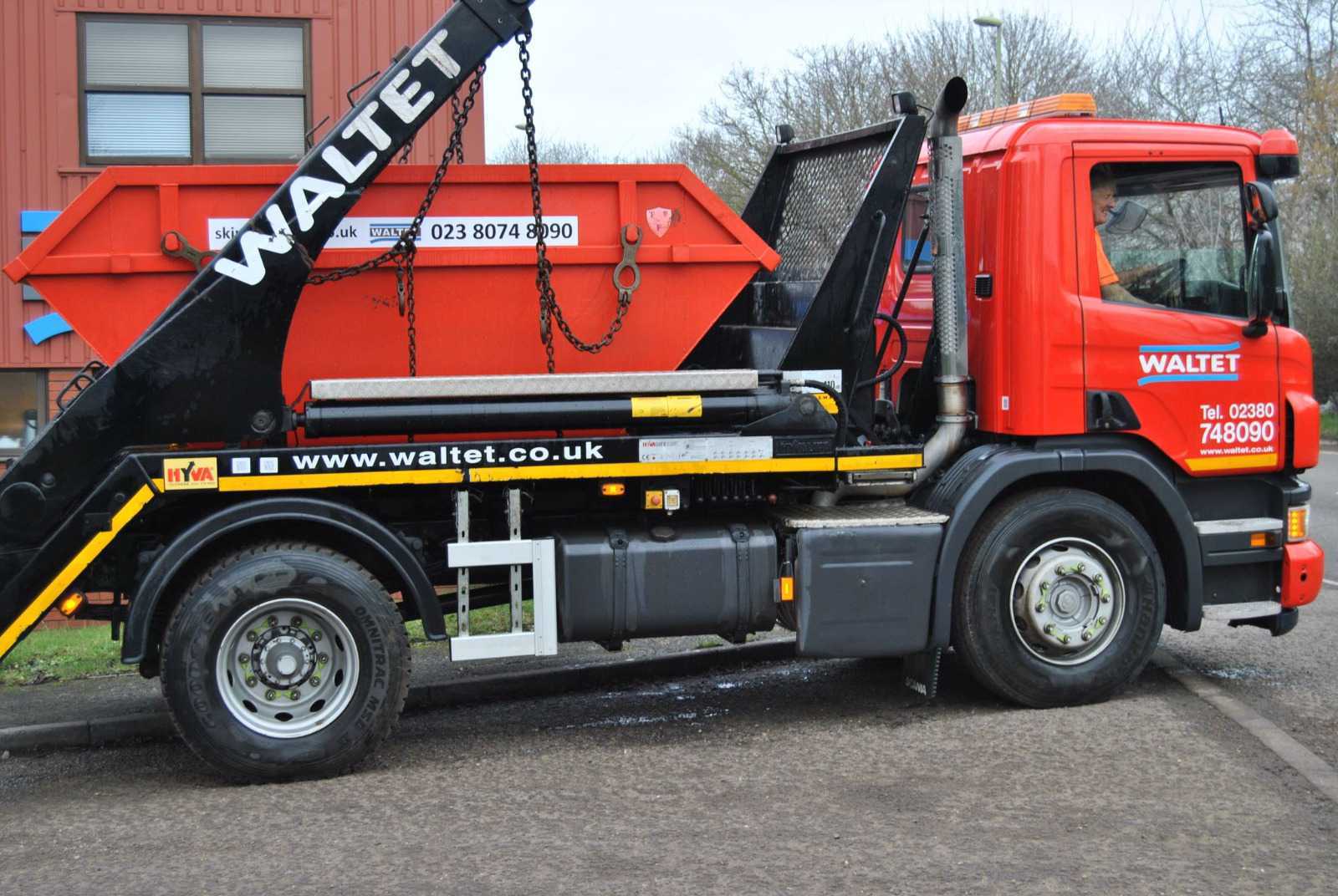
Skips remain one of the most practical ways to manage construction waste, particularly where materials accumulate gradually throughout a project.
However, the skip needs to match the waste volume and site requirements.
A skip that is too small may fill quickly, leaving waste with nowhere to go while the site waits for an exchange.
A skip that is unnecessarily large can occupy valuable space that could have been used more productively.
Before arranging skip hire, consider both capacity and footprint.
Ask how quickly the skip is likely to fill and whether the space it occupies is justified by the amount of waste being generated.
For ongoing construction work, arranging regular exchanges can also prevent waste from accumulating around a full container.
Don’t Use a Skip for Everything
A common mistake is assuming every waste problem needs another skip.
It doesn’t.
Different waste streams require different solutions, and choosing the right collection method can dramatically reduce the amount of space waste occupies.
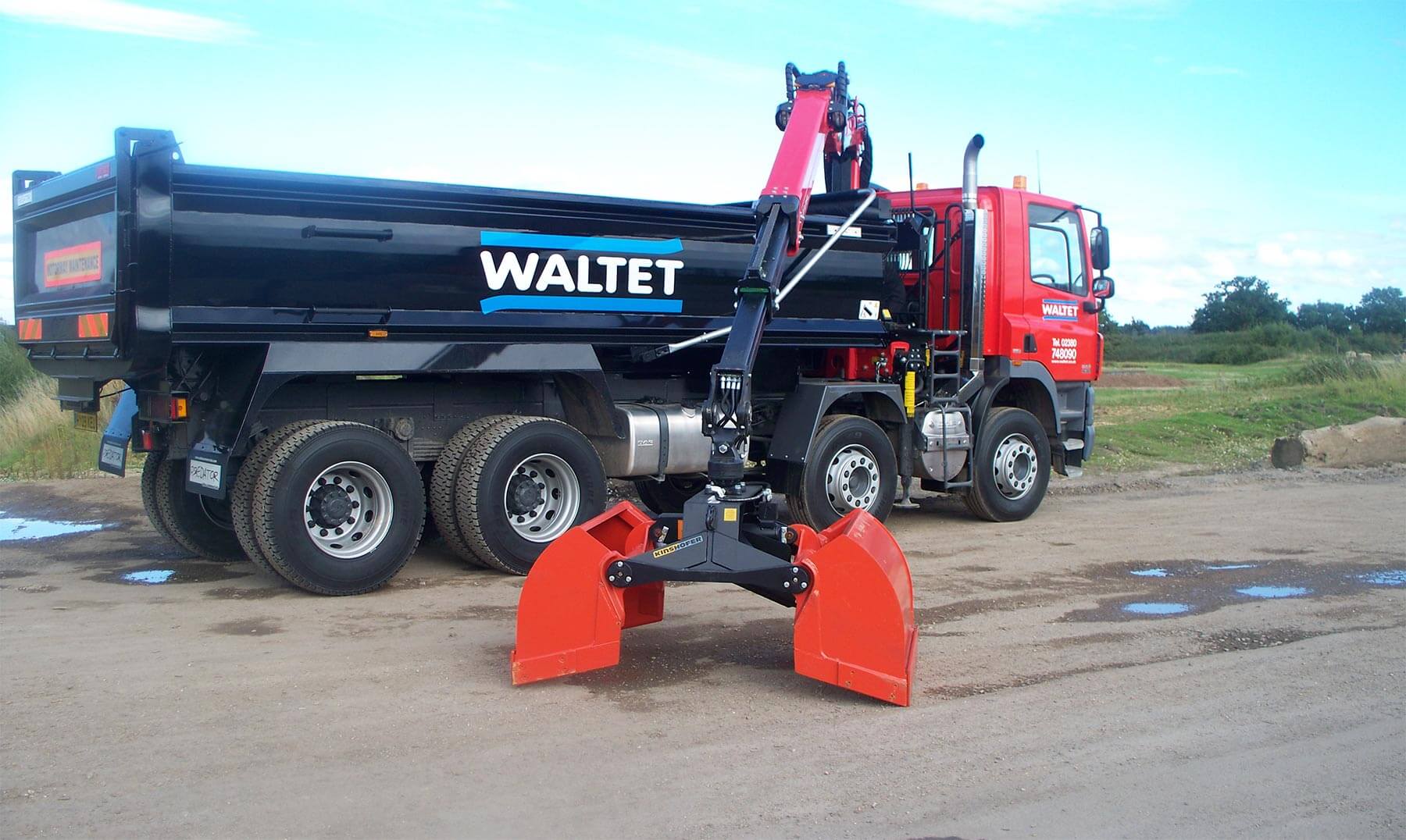
For example, large quantities of excavated soil, hardcore or rubble may be better suited to grab hire or muckaway services.
Instead of keeping multiple skips on site while large volumes are gradually loaded, suitable bulk materials can be stockpiled safely and collected when required.
The right solution depends on:
- Waste type
- Volume
- Site access
- Available space
- Project schedule
Using a combination of waste services can be much more efficient than relying on one method throughout the entire project.
Consider Muckaway for Excavation Waste
Excavation can generate substantial quantities of material very quickly.
Soil, clay, chalk and other excavation arisings can occupy large sections of a site if removal is not properly coordinated with the groundwork programme.
This is where muckaway services can be particularly valuable.
Scheduling muckaway alongside excavation helps prevent large stockpiles from remaining on site longer than necessary.
This can free space for:
- Continuing excavation
- Foundations
- Drainage work
- Material deliveries
- Plant movements
- Subsequent construction phases
For projects across Hampshire, planning muckaway in advance can help groundworks progress without waste becoming a bottleneck.
Use Grab Hire for Fast Bulk Clearance
When suitable loose materials have already accumulated, grab hire can provide an efficient method of clearing them.
A grab lorry can collect materials directly from an accessible stockpile, reducing the need for manual loading.
This can be useful for materials such as:
- Soil
- Hardcore
- Concrete
- Rubble
- Certain construction materials
Grab hire can be particularly valuable where keeping a skip on site for an extended period would occupy too much working space.
It also provides flexibility for projects where waste is generated in concentrated stages rather than continuously.
Segregate Waste Wherever Practical
It may sound counterintuitive, but organised waste segregation can help make better use of available site space.
When everything is thrown together without a clear system, waste areas quickly become disorganised.
Separating materials into designated streams makes it easier to understand:
- What can be recycled
- What needs specialist handling
- Which containers are filling fastest
- Which materials are ready for collection
Common recyclable construction materials can include:
- Wood
- Metal
- Concrete
- Brick
- Hardcore
- Cardboard
- Suitable inert materials
Better segregation can also improve material recovery once waste reaches the recycling facility.
Don’t Wait Until the Skip Is Overflowing
A full skip should not be the signal to start thinking about collection.
By that point, it may already be affecting site operations.
Once the skip reaches capacity, additional waste often starts appearing beside it. This creates untidy working areas and can introduce unnecessary safety risks.
For projects generating waste consistently, collections should be scheduled proactively.
If you know approximately how quickly a container fills, you can establish a collection or exchange schedule that keeps capacity available.
The objective should be simple: when workers need to dispose of waste, there should always be somewhere appropriate for it to go.
Position Waste Containers Strategically
Where you put a skip can be almost as important as which skip you choose.
A poorly positioned container may:
- Block vehicle access
- Interfere with deliveries
- Increase walking distances
- Occupy valuable material storage space
- Make collection more difficult
Waste containers should be accessible enough to use efficiently but positioned so they do not interfere with critical site operations.
The collection vehicle also needs sufficient access.
Thinking about waste container positioning during site setup can prevent repeated relocation and unnecessary disruption later.
Make Waste Removal Match Your Project Programme
Waste volumes change as construction progresses.
During demolition, large quantities may be generated within a short period. Groundworks may create significant amounts of soil and hardcore. Later phases may generate more packaging, timber and general construction waste.
Your waste strategy should change accordingly.
For example:
Demolition phase: frequent clearance of rubble and demolition waste.
Groundworks: muckaway or grab hire for excavation materials.
Construction: appropriately sized skips for ongoing waste.
Fit-out: more emphasis on segregating packaging, timber and recyclable materials.
Completion: final clearance to leave the site clean and ready for handover.
Matching waste services to project stages helps prevent unnecessary containers occupying site space when they are not needed.
Turn Waste into a Resource Through Recycling
Construction waste should not automatically be viewed as material with no further value.
Many waste streams can be recovered, processed and returned to productive use.
At Waltet’s waste disposal and recycling centre on Bunny Lane in Romsey, incoming waste is screened and different materials are segregated for recovery or recycling.
Waltet recycles on average nearly 90% of the waste it handles, helping minimise the amount sent to landfill.
The recycling process can also transform suitable construction materials into useful products, supporting a more circular approach to resource management.
Instead of waste simply leaving one construction site to become an environmental problem elsewhere, appropriate materials can be recovered and given another useful purpose.
Don’t Forget Your Waste Responsibilities
Creating more site space should never mean removing waste through the quickest available option without considering where it goes.
Businesses producing and handling waste have legal responsibilities.
Waste should be transferred to appropriate authorised organisations, with relevant documentation maintained where required.
Using a properly licensed waste management provider helps ensure materials are collected and processed responsibly.
This is particularly important for construction and commercial projects generating substantial quantities of waste.
Signs Your Site Waste Strategy Needs Attention
You may need to reconsider your current approach if:
- Waste is regularly stored outside designated areas
- Skips are frequently overflowing
- Materials are being moved several times before disposal
- Waste is blocking access routes
- Workers are spending excessive time handling waste
- Deliveries are competing with waste for space
- Excavated material is remaining on site longer than planned
- You are using skips for waste that could be removed more efficiently another way
- Recycling opportunities are being missed
These are not simply housekeeping issues. They can indicate that waste management is affecting overall project efficiency.
A Better Approach to Construction Waste Management
An effective site waste strategy does not need to be complicated.
Start with four questions:
What waste will we generate?
Identify likely materials and volumes before each project stage.
Where will it go temporarily?
Allocate suitable areas without interfering with site access or essential operations.
How will it leave the site?
Choose between skip hire, grab hire, muckaway or another appropriate waste service.
What happens afterwards?
Work with a recycling-led waste provider that can recover suitable materials and minimise unnecessary landfill disposal.
These simple decisions can transform waste management from a recurring site problem into a planned operational process.
Frequently Asked Questions
How can construction sites reduce the amount of space used for waste?
Plan collections around project stages, choose correctly sized containers and remove bulk materials through suitable services such as grab hire or muckaway rather than allowing them to accumulate.
When should I use grab hire instead of a skip?
Grab hire can be useful when you have a substantial quantity of suitable loose material already stockpiled and accessible for collection. The right choice depends on the waste type, quantity and site conditions.
How often should construction skips be collected?
There is no single schedule suitable for every project. Collection frequency should reflect how quickly waste is generated. Busy sites may benefit from planned exchanges rather than waiting until skips are completely full.
Can construction waste be recycled?
Many construction waste streams can be recovered or recycled. Waltet’s Romsey facility screens and segregates suitable materials, with the company recycling on average nearly 90% of the waste it handles.
Why is waste planning important on restricted construction sites?
Restricted sites have limited space for materials, machinery, vehicles and waste. Coordinating waste removal carefully prevents waste from occupying areas needed for productive construction activities.
Conclusion: Your Site Space Should Be Working for You
Construction sites are working environments, and every available area should contribute to safe and efficient project delivery.
Waste that remains on site unnecessarily does the opposite.
It occupies valuable space, complicates logistics, restricts movement and can eventually affect productivity and project schedules.
The solution is not simply to remove waste more often. It is to manage it more intelligently.
By choosing the right skip sizes, scheduling collections proactively, using grab hire or muckaway where appropriate, improving segregation and working with a recycling-led waste provider, construction businesses can keep valuable site space available for the work that actually moves the project forward.
Waltet provides skip hire, grab and tipper services, muckaway and recycling solutions across Hampshire and surrounding areas. With waste processing and recycling facilities at Bunny Lane in Romsey, Waltet can help construction and commercial projects manage waste responsibly while keeping sites clear and productive.
If waste is taking over valuable space on your site, speak to Waltet about a waste management solution that fits your project rather than forcing your project to fit around its waste.